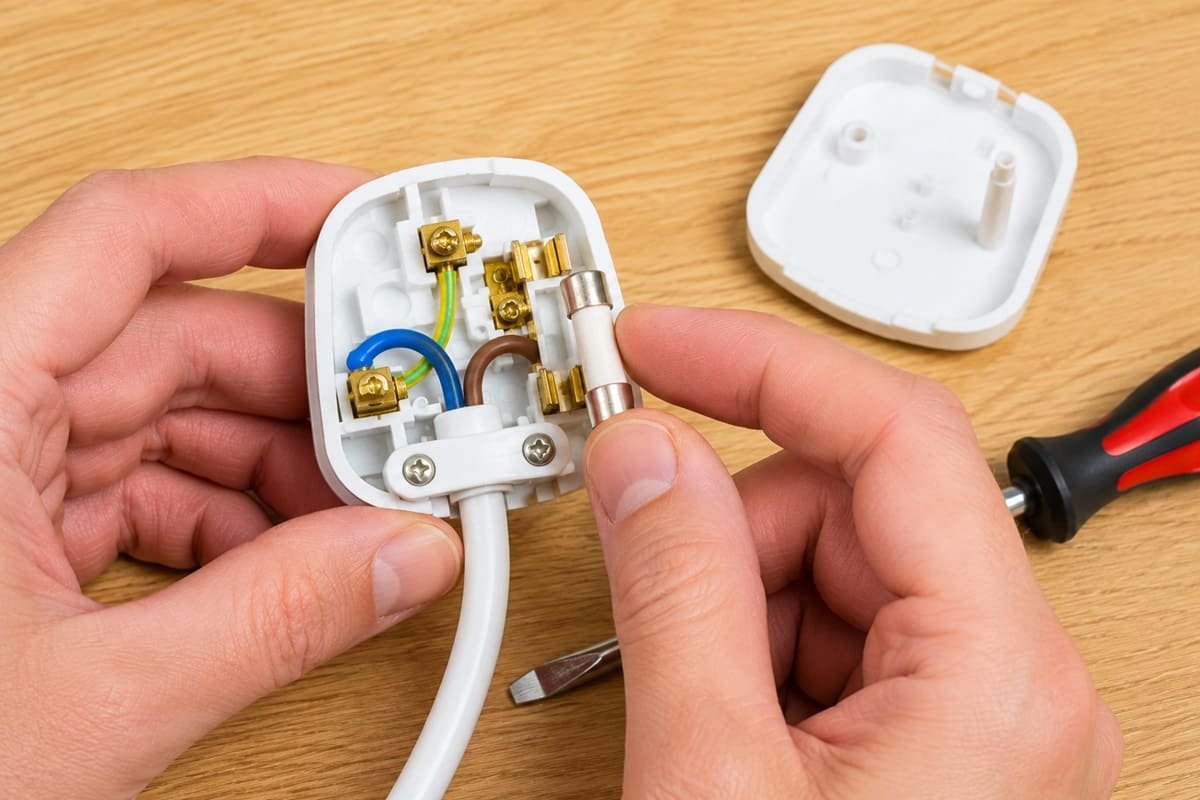
A blown fuse is a common cause of electrical appliances suddenly stopping working. In the UK, most appliances use a BS 1363 fused plug, which is designed to protect both the appliance and your home’s electrical system from excessive current.
If you are wondering how to change a fuse, the most important thing is to do so safely. Although replacing a fuse is usually simple, using the incorrect fuse rating or working on a damaged plug can pose a risk of fire or electric shock.
What Does a Plug Fuse Do?
A plug fuse is a safety device that interrupts the electrical supply if too much current flows through the appliance.
Common UK plug fuse ratings include:
- 3A – Typically used for low-power appliances such as lamps and chargers.
- 13A – Commonly used for higher-powered appliances such as kettles, heaters, and washing machines.
The correct fuse rating should match the appliance manufacturer’s recommendations rather than simply fitting the highest-rated fuse available.
Signs a Plug Fuse May Have Blown
A blown fuse may be the cause if:
- An appliance suddenly stops working.
- Other sockets in the room still have power.
- The plug or cable shows no obvious signs of damage.
- The circuit breaker has not tripped.
However, a blown fuse may also indicate an underlying fault within the appliance, so replacing the fuse may not always solve the problem.
Safety Before Replacing a Fuse
Before inspecting or replacing a plug fuse:
- Disconnect the appliance from the mains supply.
- Check the power cable and plug for visible damage.
- Never use a cracked, melted, or damaged plug.
- Replace the fuse only with one that has the correct rating and complies with the relevant UK standards.
If you are unsure which fuse is required, consult the appliance manual or contact the manufacturer before fitting a replacement.
When Should You Avoid DIY Repairs?
If an appliance repeatedly blows fuses or shows signs of overheating, burning smells or damaged wiring, replacing a fuse should not be treated as a solution.
If this is the case, stop using the appliance immediately and arrange for it to be inspected or repaired by a qualified electrician or appliance repair specialist. Continuing to replace fuses without identifying the underlying problem could create a serious safety hazard.
Final Thoughts
Understanding how plug fuses work can help UK homeowners to identify simple electrical issues while keeping safety a priority. If a fuse appears to have failed, always disconnect the appliance first and use the correct replacement fuse specified for it. Avoid using damaged plugs or cables.
If the new fuse also fails, or if you suspect a fault beyond the fuse itself, discontinue use and seek professional advice. Remember that protecting your home and your family’s safety is always more important than restoring power quickly.