Due to fluctuating energy prices, many UK households are looking for practical ways to lower their electricity bills. The good news is that lowering your energy costs doesn’t require expensive home improvements. Making small changes to your daily habits and upgrading to energy efficient appliances can make a noticeable difference over time.
Switch to Energy Efficient Lighting
One of the simplest ways to reduce electricity usage is to replace traditional light bulbs with LED bulbs. LED bulbs use up to 80% less electricity than older incandescent bulbs and have a much longer lifespan. Although they cost slightly more, they typically pay for themselves through lower energy bills and reduced replacement costs.
Turn Off Appliances Properly
Many electronic devices continue to consume power even when they’re on standby. Devices such as televisions, gaming consoles, microwaves, and chargers can all contribute to unnecessary electricity usage. You can eliminate this “phantom” energy consumption by switching appliances off at the wall or using smart power strips.
Choose Energy Efficient Appliances
Look for models with high energy efficiency ratings when replacing household appliances. Modern washing machines, refrigerators, dishwashers, and tumble dryers use significantly less electricity than older models. Although they may cost more upfront, efficient appliances can save you hundreds of dollars over their lifespan.
Make Better Use of Your Washing Machine
Running full loads instead of half loads reduces the number of cycles needed each week. Washing clothes at 30°C instead of higher temperatures uses considerably less electricity while effectively cleaning most everyday laundry. Whenever possible, air dry clothes instead of using a tumble dryer, as it is one of the most energy intensive household appliances.
Improve Home Insulation
Although insulation primarily reduces heating costs, it can also lower your home’s overall energy consumption by maintaining a comfortable temperature more efficiently. Improved energy efficiency can be achieved through loft insulation, cavity wall insulation, door and window draught proofing, and sealing gaps around pipes.
Use Smart Controls
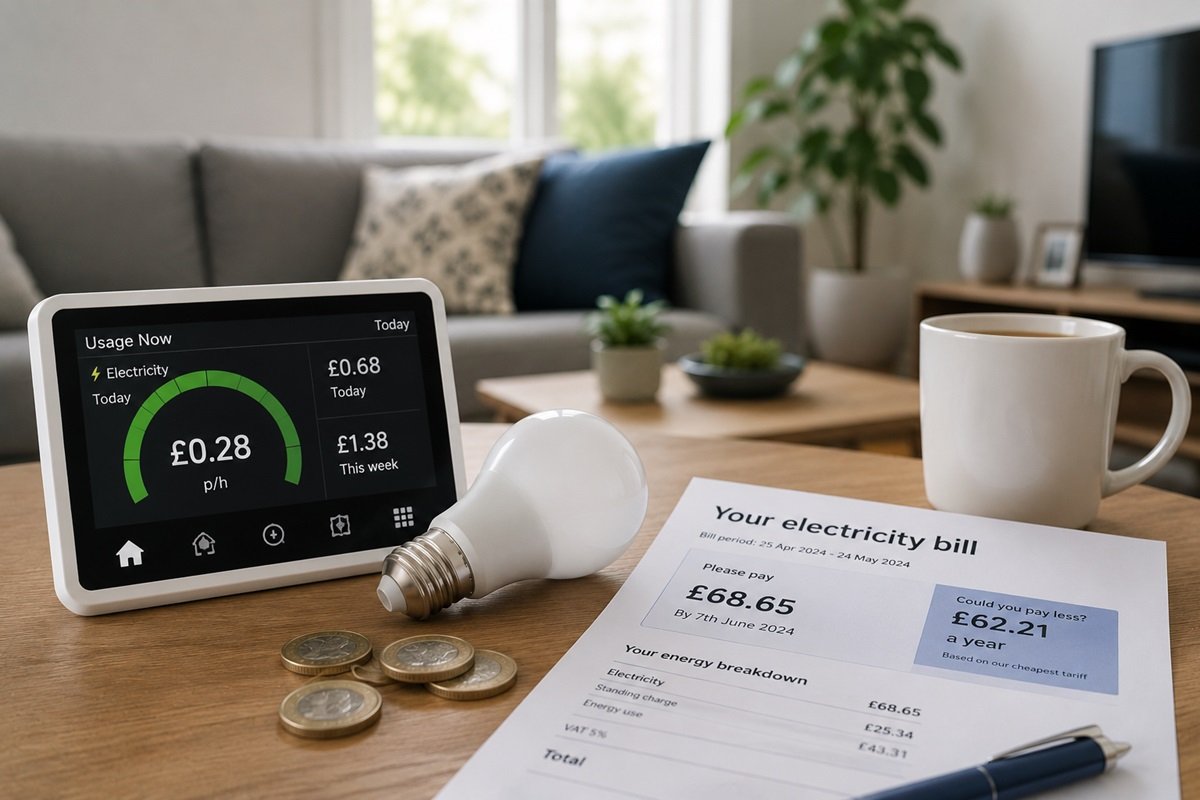
Smart thermostats and smart plugs help homeowners monitor and manage their electricity usage more effectively. These devices often allow you to schedule appliances, track energy consumption, and switch equipment off remotely. Understanding where electricity is being used can help you identify simple opportunities for savings.
Compare Energy Suppliers
Electricity prices vary by supplier and tariff. Regularly comparing available deals could help reduce your monthly bills. Fixed rate tariffs offer greater certainty, while variable tariffs can sometimes save you money depending on market conditions. Before switching, compare standing charges as well as unit rates.
Take Advantage of Off Peak Tariffs
If your electricity supplier offers time of use tariffs, you may significantly reduce your electricity costs by running appliances such as washing machines, dishwashers, and electric vehicle chargers during off peak hours. This option is ideal for households with flexible energy usage.
Final Thoughts
Reducing your electricity bills often requires combining several small improvements rather than relying on a single solution. Switching to LED lighting, avoiding standby power, upgrading to energy efficient appliances, improving insulation, and selecting the right energy plan can all lead to significant long term savings. UK homeowners can reduce costs and lower their environmental impact by adopting smarter energy habits and regularly reviewing their household’s electricity usage.