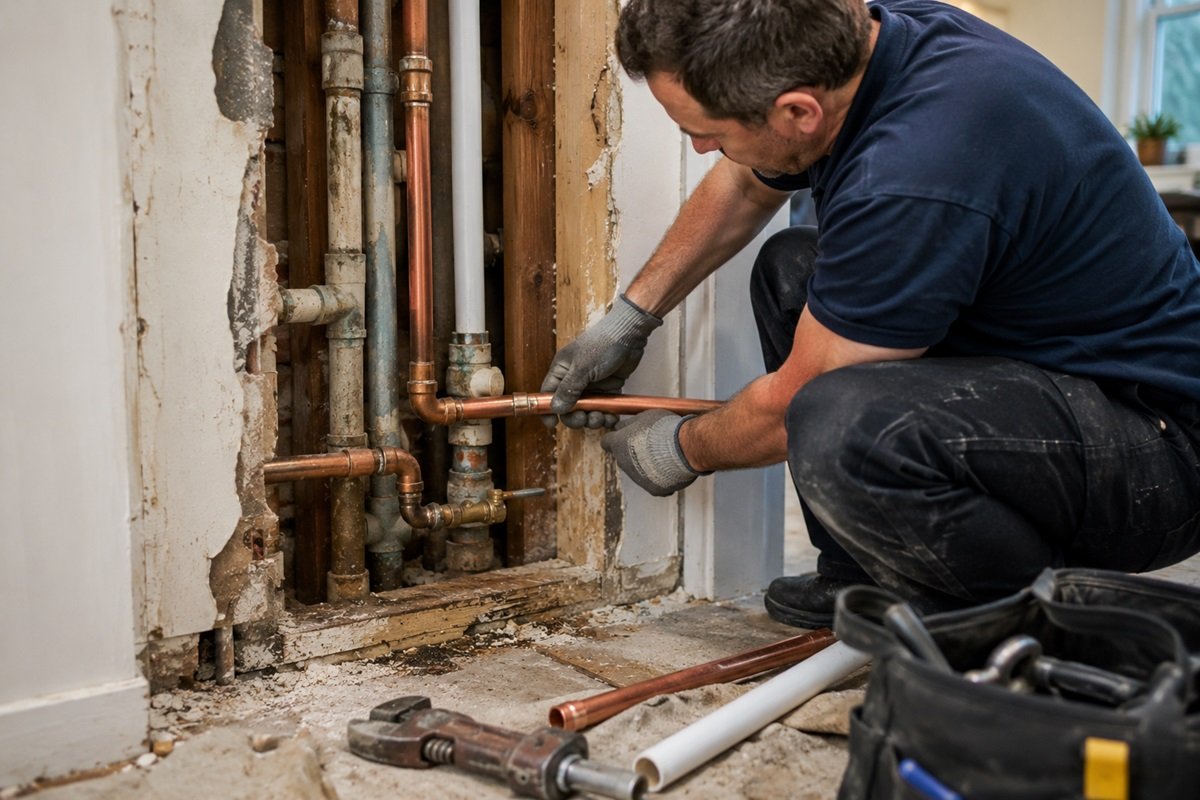
Old plumbing pipes do not last forever. Over time, they can corrode, leak, and impact your home’s water quality. Knowing when to replace them helps prevent costly repairs, protects your property, and keeps your plumbing system running efficiently. If your home is over 40 years old, consider having your pipes professionally inspected.
Signs Your Pipes Need Replacing
Look out for these common warning signs:
- Frequent leaks or repeated plumbing repairs
- Low water pressure throughout the property
- Brown, rusty, or discoloured tap water
- Metallic taste or unusual odour in drinking water
- Visible corrosion, rust, or green staining on exposed pipes
- Damp patches, mould, or unexplained increases in water bills
If you notice more than one of these issues, replacing your pipes is often more cost-effective than continual repairs.
How Long Do Plumbing Pipes Last?
The lifespan depends on the material used:
- Copper pipes: 50–70 years
- Galvanised steel: 40–50 years
- Lead pipes: Should be replaced immediately where possible
- Plastic (PEX/PVC): 40–50+ years with proper installation
Many older UK homes still contain ageing plumbing that may no longer meet modern standards.
Why Replace Old Pipes?
Installing new pipework offers several long-term benefits:
- Improves water quality
- Reduces the risk of leaks and burst pipes
- Restores consistent water pressure
- Lowers future maintenance costs
- Increases property value
- Improves plumbing reliability and efficiency
Modern plastic and copper systems are more durable and resistant to corrosion than older materials.
Should You Replace Lead Pipes?
Yes, if your property still has lead pipes, replacing them should be a priority. Lead piping was commonly installed in homes built before the 1970s, and it can affect the quality of your drinking water. Replacing lead pipes helps ensure a safer water supply and brings your plumbing closer to current UK standards.
Repair or Replace?
A single damaged section can usually be repaired. However, full replacement is often the better investment if:
- Pipes are over 50 years old
- Multiple leaks occur each year
- Corrosion is widespread
- Water quality continues to decline
- Repairs are becoming increasingly expensive
A qualified plumber can inspect your system and recommend the most suitable solution.
Conclusion
Replacing old pipes before they fail can save you thousands of dollars in emergency repairs and water damage. If your home has aging plumbing, recurring leaks, or poor water quality, scheduling a professional inspection is a sensible next step. Investing in modern pipework improves safety and efficiency while providing peace of mind and protecting your property for years to come.