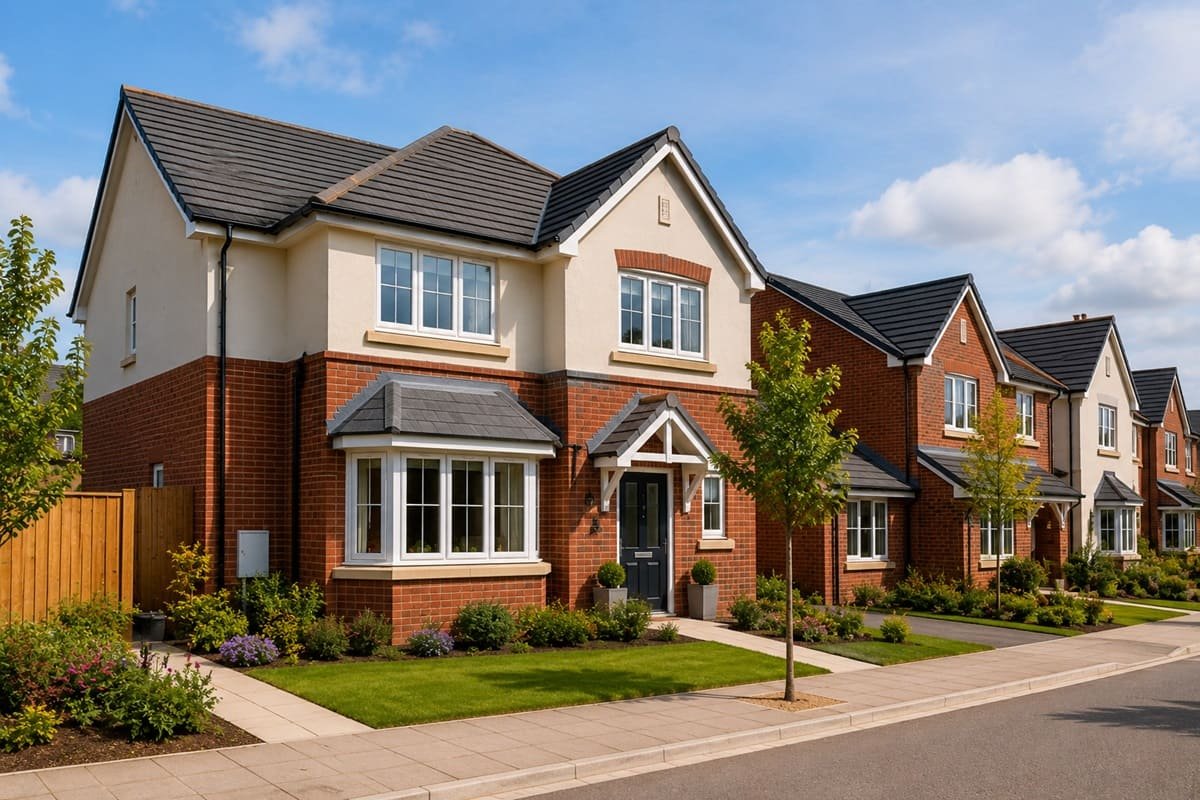
If you are researching the property market, you may have asked yourself: what is residential property? Put simply, it is a building or part of a building that is designed primarily for people to live in. This includes owner-occupied homes, rented properties, and other accommodation intended for residential use.
It is important for homeowners, landlords, tenants and property investors to understand the difference between residential and commercial property. The type and intended use of a property can affect its financing, taxation, insurance and legal requirements.
What Is Residential Property?
A residential property is a type of real estate intended to provide accommodation for individuals or households. It can be occupied by the owner or rented out to tenants.
Examples include houses, flats, apartments and maisonettes, as well as other types of private residence. Depending on planning and legal requirements, a residential property may be newly built, previously occupied, or converted from another type of building.
In the UK, the exact classification and permitted use of a property depends on planning rules and the building’s circumstances.
What Is a Residential Home?
A residential home is one that is used primarily as a place for people to live. For instance, a semi-detached house inhabited by a family would be considered a residential home.
The term can also describe various types of accommodation, ranging from detached houses and terraced homes to flats and apartments. The important factor is the property’s residential purpose, rather than its size, age, or market value.
A residential home can also be used as an investment property. For instance, a landlord might buy a flat and rent it out to tenants. Even though the owner uses it to generate rental income, it remains residential property.
Types of Residential Property in the UK
Residential property comes in several forms, including:
- Detached houses: Standalone homes that do not share walls with neighbouring properties.
- Semi-detached houses: Homes joined to one neighbouring property by a shared wall.
- Terraced houses: Properties connected in a row, usually sharing walls with homes on either side.
- Flats and apartments: Individual residential units within a larger building.
- Maisonettes: Residential properties arranged over more than one floor with their own living accommodation.
- Bungalows: Homes generally arranged on a single main floor.
The UK residential market also includes new-build developments, converted properties and buy-to-let homes.
Residential Property for Owners and Investors
Residential property can serve different purposes. For example, a homeowner may purchase a property to live in, while an investor may purchase a property to rent out or sell on later.
Buy-to-let is one example of uk property investment investment. In this arrangement, an investor purchases a residential property with the intention of renting it out to tenants.
However, property investment involves costs and risks. Investors should consider factors such as mortgage interest, maintenance, insurance, void periods, taxes, management costs, and changes in property values before making a decision.
Residential vs Commercial Property
The main difference between residential and commercial property is their intended use.
Residential property is intended for people to live in, whereas commercial property is associated with business activities. Examples of commercial property include offices, shops and warehouses.
This distinction is important because different planning, financing, taxation, tenancy and regulatory considerations may apply.
Some buildings can have mixed uses. For instance, a property may contain residential accommodation alongside commercial space. In such cases, the legal and planning position needs to be considered carefully.
Why Does Residential Property Matter?
Understanding what constitutes a residential property is a useful foundation for anyone researching the UK property market. It helps buyers to identify suitable homes, gives landlords a clearer understanding of rental properties, and provides investors with a starting point for researching residential real estate.
Before purchasing or converting a property, it is important to check its permitted use, title information, and any relevant local planning requirements. Complex situations may require professional legal, tax or property advice.
Conclusion
So, what is a residential property? It is broadly a property intended for people to live in, including houses, flats, apartments, maisonettes and other forms of residential accommodation.
If you are buying your first home, renting, becoming a landlord or researching property investment, it is important to understand residential property. From there, you can delve into related topics such as property types, buy-to-let, mortgages, rental properties, and UK property investment.
Frequently Asked Questions
Residential property is real estate primarily intended for people to live in. Examples include houses, flats, apartments, maisonettes and bungalows.
Residential property is primarily intended for living accommodation, while commercial property is generally used for business purposes such as offices, shops or warehouses.
Generally, a buy-to-let home is residential property because it is intended to provide living accommodation to tenants. However, specific legal, tax and planning considerations can apply.
Yes. A flat or apartment is generally considered residential property when it is intended and authorised for residential accommodation.