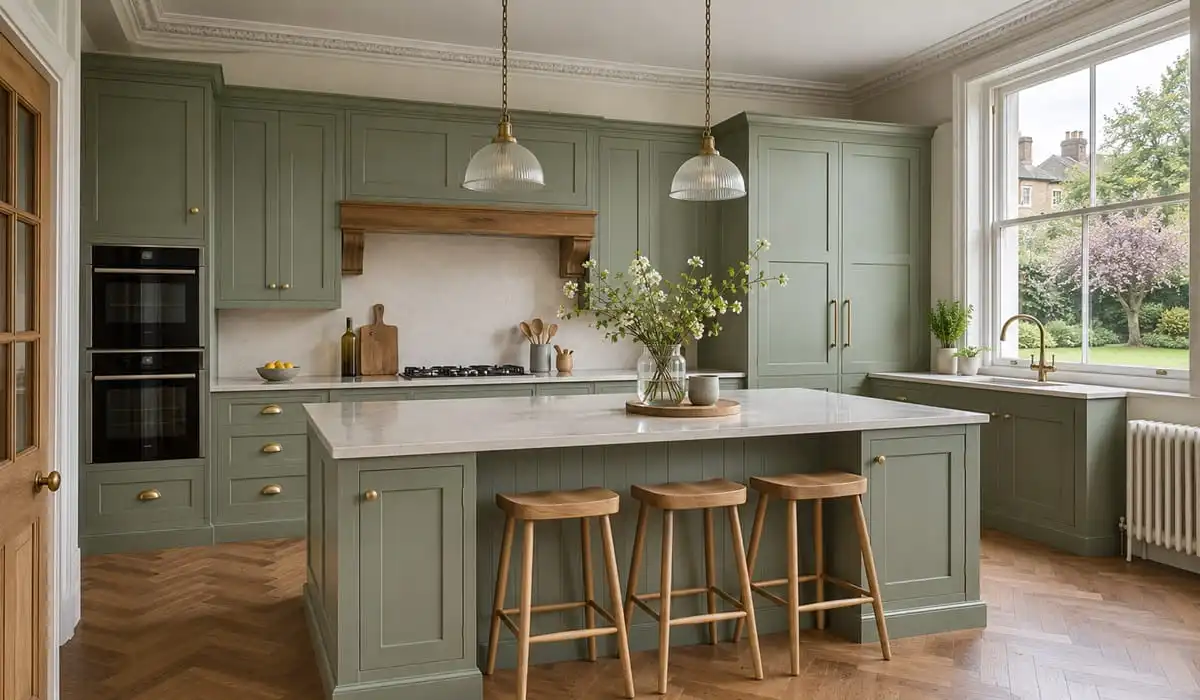
A bespoke kitchen can transform how you cook, entertain and use your home, but it often comes with a substantial price tag. So, how much does a bespoke kitchen cost in the UK?
In 2026, a typical bespoke kitchen project costs around £20,000 to £75,000, according to Checkatrade. However, the final amount depends on the kitchen’s size, materials, appliances and installation requirements.
Whether you’re renovating a compact terrace or designing a spacious family kitchen, understanding the costs can help you make informed decisions and avoid unexpected expenses.
How Much Does a Bespoke Kitchen Cost in 2026?
According to Checkatrade’s 2026 bespoke kitchen cost guide, homeowners can expect to spend approximately £20,000–£75,000 on a bespoke kitchen.
A straightforward design may cost less than an elaborate kitchen featuring handmade cabinetry, premium stone worktops and high-end integrated appliances.
Here is a breakdown of published UK cost estimates:
| Cost component | Estimated price |
|---|---|
| Complete bespoke kitchen project | £20,000–£75,000 |
| Bespoke kitchen cabinetry | £12,000–£25,000 |
| Professional kitchen designer | £50–£150 per hour |
| Full kitchen design service | £770–£4,600 |
| Kitchen fitter | £280–£360 per day |
Importantly, some kitchen companies quote only for cabinetry, while others provide a complete design-and-installation package. Always check whether VAT, worktops, appliances and fitting are included.
What Affects the Cost of a Bespoke Kitchen?
Several factors influence bespoke kitchen prices. Understanding them will help you identify where your money is going.
Kitchen Size and Layout
Larger kitchens generally require more cabinets, worktop materials and installation time.
However, smaller spaces aren’t automatically cheaper. Awkward corners, sloping ceilings and unusual room dimensions may require specialist joinery.
A complicated layout can therefore cost more than a larger, straightforward kitchen.
Cabinetry and Materials
Made-to-measure cabinets are one of the biggest expenses.
Cabinet construction, door finishes, internal storage and specialist features all affect the price.
For example, solid timber cabinetry, dovetail-jointed drawers and hand-painted doors generally require more manufacturing work than standard modular units.
Custom pantry cupboards, pull-out storage and full-height cabinets can also increase expenditure.
Worktops and Appliances
Your choice of worktop can significantly influence the overall budget.
Laminate is generally a more affordable option, while granite, quartz and other premium surfaces involve different material, fabrication and fitting costs.
Similarly, integrated refrigeration, specialist ovens and premium cooking appliances can increase the price considerably.
Choose features based on how you use your kitchen rather than appearance alone.
Installation and Labour
Professional fitting is another important consideration.
According to Which’s kitchen fitter research, Building Cost Information Service estimates suggest labour typically accounts for approximately 20–30% of total kitchen expenditure.
Bespoke kitchen fitting can also cost 20–35% more than fitting a standard kitchen.
Complex joinery, uneven walls and additional preparation work may increase installation costs.
What Additional Costs Should You Budget For?
The cabinetry price rarely tells the whole story.
Depending on your project, additional expenses may include:
- Removing and disposing of existing kitchen units.
- Moving plumbing connections or relocating the sink.
- Installing additional sockets and lighting.
- Plastering, decorating and flooring.
- Upgrading ventilation or extraction.
- Structural alterations and associated professional fees.
For work involving gas appliances, use an appropriately qualified Gas Safe registered engineer. Electrical and building work must also meet the applicable regulations.
The GOV.UK Building Regulations guidance explains relevant requirements in England.
Unexpected issues can also emerge once an old kitchen is removed. Keeping a contingency within your renovation budget is sensible.
For further preparation advice, read our guide to common UK home renovation problems.
Bespoke vs Standard Fitted Kitchens: Is the Extra Cost Worth It?
A standard fitted kitchen typically uses factory-manufactured units available in predetermined sizes.
A bespoke kitchen, by contrast, allows cabinetry to be manufactured around your specific measurements, storage requirements and preferred finishes.
Bespoke design can be particularly useful for period properties, awkward layouts or homeowners wanting specialised storage.
However, a fully bespoke solution isn’t always necessary.
If standard units fit your room efficiently, a quality fitted kitchen may deliver the functionality you need for less money.
The best choice depends on your property, lifestyle and available budget.
A bespoke kitchen may improve everyday usability and appeal to future buyers, but it shouldn’t be treated as a guaranteed financial return.
If you’re considering renovations before selling, our guide to signs your UK property may be losing value explores other improvements worth considering.
How to Reduce Bespoke Kitchen Costs
You can control expenses without abandoning the benefits of a personalised kitchen.
Keep the existing layout. Avoiding unnecessary changes to plumbing, gas and electrical connections can reduce additional work.
Prioritise custom cabinetry. Consider bespoke units for awkward corners or important storage areas while using standard-sized cabinets elsewhere.
Compare worktop materials. Choose surfaces based on maintenance, durability and cost rather than selecting the most expensive finish.
Reuse suitable appliances. Keeping functioning appliances can free up money for cabinetry or installation.
Avoid unnecessary extras. Specialist mechanisms, decorative finishes and elaborate storage features can quickly increase costs.
If a complete replacement exceeds your budget, smaller improvements may be worthwhile. Explore our home interior transformation ideas for alternatives.
What Should You Check Before Accepting a Kitchen Quote?
Before committing to a supplier, request a detailed written quotation.
Check that it clearly identifies:
- Cabinet materials, construction and finishes.
- Worktops, appliances and accessories.
- Delivery and installation charges.
- VAT and any additional fees.
- Plumbing, electrical work and preparation.
- Payment stages, timescales and guarantees.
- Work excluded from the agreed price.
Compare quotations using the same specification wherever possible.
Which? recommends obtaining at least three quotations and using a fixed-price contract where practical.
A lower initial quote isn’t necessarily better value if important installation work or materials are excluded.
Frequently Asked Questions
Is £20,000 Enough for a Bespoke Kitchen?
£20,000 is at the lower end of Checkatrade’s typical bespoke kitchen range. A modest made-to-measure project may be achievable, but the final specification and included services will determine whether your budget is sufficient.
How Much Do Bespoke Kitchen Cabinets Cost?
Checkatrade estimates bespoke cabinetry at approximately £12,000–£25,000. Prices depend on cabinet quantity, materials, construction methods and design complexity.
How Long Does a Bespoke Kitchen Take to Install?
Checkatrade suggests fitting typically takes around 10–15 working days. However, the entire project may take several months when design, manufacturing, delivery and preparation are included.
Does a Bespoke Kitchen Add Value to Your Home?
A well-designed kitchen can improve functionality and make a property more appealing. However, any effect on resale value depends on the property, local market and renovation cost. There is no guaranteed return on investment.
Final Thoughts
A bespoke kitchen in the UK typically costs around £20,000–£75,000, although luxury projects can exceed this range.
The key to budgeting successfully is understanding what you’re paying for. Compare detailed quotations, prioritise features that improve daily life and allow for unexpected work.
A thoughtfully planned kitchen should suit both your home and your finances.