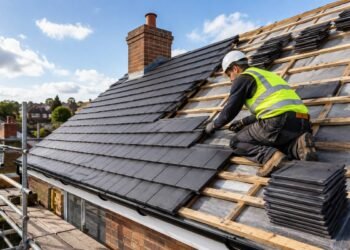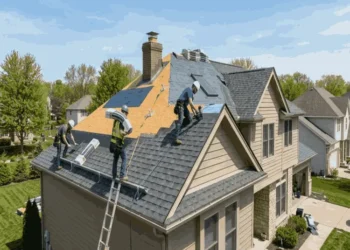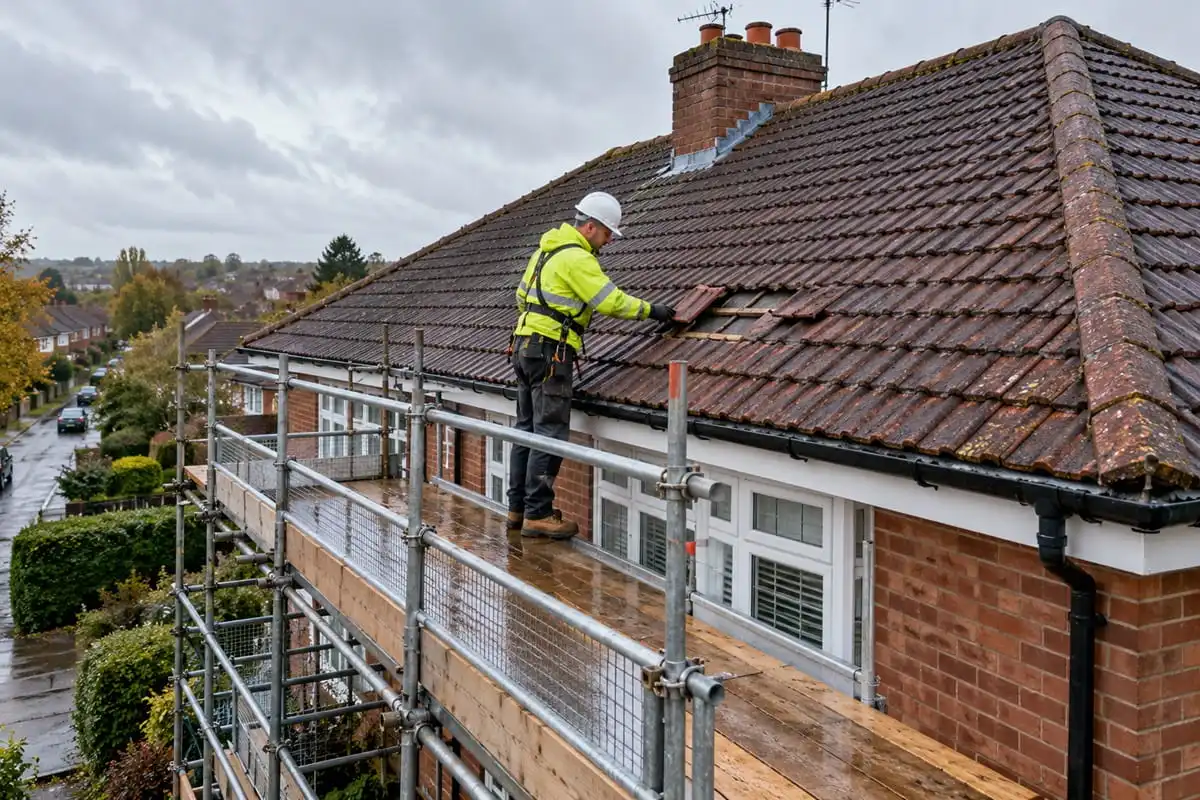
A leaking roof needs quick attention, but that does not mean climbing onto it yourself. To fix a leaking roof, first contain the water safely, look for clues from inside the property and at ground level, then arrange a repair to the damaged tiles, flashing, guttering or roof membrane. The correct repair depends on where rainwater is entering, not simply where a stain appears on the ceiling.
Here are the immediate steps, repair methods and likely UK costs.
What Should You Do First When Your Roof Is Leaking?
Protect people and limit water damage before trying to identify the fault. A bucket and a call to a roofer are safer first steps than going onto a wet roof.
- Move belongings away from drips. Catch water in a bucket and protect flooring.
- If water is entering a light fitting, socket or electrical area, keep clear. Isolate the relevant electricity supply only if you can do so safely, and seek advice from a registered electrician before using affected electrics.
- Stay away from bulging ceilings; do not puncture them. Seek urgent advice.
- Photograph the damage, note when the leak occurs and contact a roofer. Tell your insurer promptly if storm damage may be involved.
Roof work carries serious fall risks. Do not climb onto a roof or install a tarpaulin at height. Isolate affected electricity only where safe, and have water-damaged electrics assessed by a registered electrician.
How to Find Where Your Roof Is Leaking
The damp patch indoors may be some distance from the gap outdoors. Water can run along roofing underlay, timber or other surfaces before appearing on a ceiling.
If the loft is safely accessible, use a torch to look for marks, damp insulation and trails along rafters. Avoid unsafe loft edges and wet electrics. From ground level, look for slipped tiles, loose flashing, overflowing gutters and chimney or roof-window damage.
Photograph any visible clues to help your roofer identify the problem.
How to Fix a Leaking Roof
A lasting repair fixes the entry point and any damaged underlying materials. A bead of sealant on the visible damp area does not establish where water is getting in.
Slipped or Cracked Tiles
A roofer can replace tiles or slates, refix slipped coverings and check underlay and battens. Repairs must suit the roof material and fixing method.
Damaged Flashing
Flashing seals junctions around chimneys, walls and roof windows. A roofer may repair or replace it and address failed adjoining mortar.
Flat Roof Membrane Damage
Treatment depends on whether the covering is felt, EPDM, GRP or another system. A roofer may patch a local defect, repair a joint or replace a deteriorated section.
Blocked Gutters and Outlets
Overflowing gutters can redirect water. Arrange safe cleaning or repairs; never lean out of upper windows or use unsecured ladders.
How Much Does It Cost to Fix a Leaking Roof in the UK?
The price depends on the fault, roof access, materials and extent of water damage. Published UK trade-price estimates suggest that a straightforward leak repair can cost a few hundred pounds, while complicated or urgent jobs can cost considerably more.
| Type of repair | Published indicative cost |
|---|---|
| Replace broken tiles | £150–£300 |
| Repair flashing | £200–£500 |
| Patch a flat roof | £200–£600 |
| Roof valley repair | £400–£800 |
| Chimney-related repair | £300–£800 |
| Emergency storm repair | £300–£1,200+ |
These are indicative UK repair price ranges, not fixed quotations. Labour, access and location can affect the total.
Ask whether scaffolding, labour, materials, call-out charges, VAT and interior repairs are included. Compare itemised quotes.
Should You Repair or Replace a Leaking Roof?
A localised defect may only need a targeted repair; widespread deterioration can make replacement more sensible. Ask your roofer to explain the roof’s overall condition, not just quote for the most visible leak.
- Consider repair: one or two damaged tiles, an isolated flashing fault or a small compatible membrane patch.
- Investigate replacement: repeated leaks in different areas, extensive covering failure, rotten supporting timber or a roof near the end of its useful life.
For substantial work, compare the cost of repair with replacement. Check relevant building-control and planning requirements, which vary by property, location and scope.
Can You Claim on Home Insurance for a Roof Leak?
Storm damage may be covered; wear and poor maintenance often are not. Check your policy, photograph damage, retain receipts and contact your insurer. Never delay safety measures.
Frequently Asked Questions
Can you fix a leaking roof yourself?
You can usually take low-risk steps indoors, such as collecting drips, protecting belongings and recording visible damage. Actual roof repairs often involve work at height, fragile surfaces or specialist materials. For a persistent leak, arrange an inspection by a competent roofer rather than attempting to walk on the roof.
How do you stop a roof leak during heavy rain?
Move belongings away, catch dripping water and stay clear of bulging ceilings and affected electrics. If it is safe, isolate the appropriate electrical supply. Do not climb a wet ladder, walk on tiles or try to secure a tarp in a storm. Arrange urgent professional assistance.
How much does it cost to fix a leaking roof in the UK?
Published UK cost guides put many straightforward leak repairs in the low hundreds of pounds. Replacing broken tiles may cost around £150–£300, while complicated emergency repairs can cost considerably more. Your final quotation depends on access, materials, damage and timing, so request an itemised assessment.
Can a single missing roof tile cause a leak?
Yes. A missing or displaced tile can expose the layers below to wind-driven rain, although the underlay may temporarily limit ingress. It does not always mean water will drip directly beneath the gap. Have the tile and surrounding roof inspected promptly to establish whether any concealed damage also needs attention.
How long does it take to repair a leaking roof?
An isolated tile or flashing repair may be completed relatively quickly once safe access is arranged. Complicated flat-roof or structural damage takes longer. Some repairs take one to three days, but weather, scaffolding and material availability can change the schedule significantly.
Will home insurance cover a leaking roof?
It depends on the cause and the policy wording. Sudden insured damage, such as a qualifying storm event, may be covered, whereas routine deterioration or poor maintenance is usually excluded. Photograph the damage, keep receipts for emergency measures and ask your insurer what evidence and approval they need before major repairs.
Conclusion
The safest way to fix a leaking roof is to contain the water, identify possible entry points without climbing onto the roof and have the defect repaired correctly. Get a clear diagnosis and itemised quotation, especially when damage involves electrics, ceilings or roof timbers. Addressing the cause promptly can prevent further deterioration.