A leaking pipe can waste hundreds of litres of water, increase your utility bills, and cause costly water damage if left untreated. The good news is that many small pipe leaks can be repaired without replacing the entire plumbing system.
The right repair method depends on where the leak is located, the pipe material, and the size of the damage. This guide explains exactly how to repair a leaky pipe safely and when it’s time to call a professional plumber.
Step 1: Turn Off the Water Supply
Before attempting any repair:
- Turn off the main stopcock or isolation valve.
- Open the nearest tap to drain remaining water.
- Dry the leaking section thoroughly using a clean towel.
Working on a wet pipe makes most repair products less effective.
Step 2: Identify the Type of Leak
The repair method depends on the problem.
| Leak Type | Best Repair Method |
| Small pinhole | Epoxy putty |
| Hairline crack | Pipe repair clamp |
| Loose compression fitting | Tighten or replace olive |
| Damaged PVC pipe | PVC coupling replacement |
| Corroded copper pipe | Replace damaged section |
| Burst pipe | Replace pipe immediately |
Never ignore corrosion, as it often indicates additional weak areas.
Solution 1: Repair a Small Pinhole Leak
This is one of the easiest repairs.
You’ll need:
- Waterproof epoxy putty
- Sandpaper
- Clean cloth
Steps
- Dry the pipe completely.
- Lightly sand around the leak.
- Knead the epoxy until the colour is uniform.
- Press it firmly over the hole.
- Smooth the edges.
- Allow it to cure according to the manufacturer’s instructions.
- Restore the water supply and check for leaks.
This repair is suitable for small holes but should be monitored over time.
Solution 2: Use a Pipe Repair Clamp
A repair clamp is ideal when the pipe has a crack or split.
Steps
- Clean the damaged area.
- Position the rubber gasket directly over the leak.
- Install the clamp around the pipe.
- Tighten the bolts evenly.
- Turn the water back on and inspect for drips.
Pipe clamps work well as emergency or medium-term repairs.
Solution 3: Fix a Leaking Compression Joint
Leaks often occur where two pipes are joined.
Steps
- Tighten the compression nut by a quarter turn using two spanners
- If the leak continues, disconnect the fitting
- Replace the compression olive if damaged
- Reassemble the joint carefully
Avoid overtightening, which can damage the fitting.
Solution 4: Repair a PVC Pipe
PVC pipes cannot usually be patched permanently.
Instead:
- Cut out the damaged section
- Clean the pipe ends
- Apply PVC primer if required
- Apply solvent cement
- Install a new repair coupling.
- Allow the adhesive to cure before turning the water back on
Replacing the damaged section provides the most reliable repair
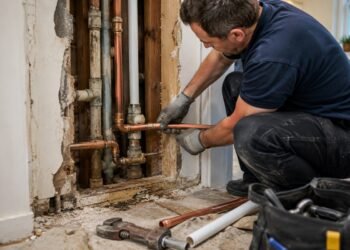
Solution 5: Replace a Corroded Copper Pipe
If corrosion has caused the leak, patching is only temporary.
The recommended repair is to:
- Cut out the damaged pipe
- Install a new copper section using compression fittings or soldered joints
- Pressure test the repair before closing any walls or floors
Replacing the damaged section prevents repeat leaks
Common Mistakes to Avoid
Many DIY repairs fail because of avoidable errors.
Avoid these mistakes:
- Repairing pipes while water is still flowing
- Using duct tape as a permanent solution
- Applying epoxy to dirty or wet surfaces
- Ignoring signs of corrosion
- Overtightening compression fittings
- Covering major leaks instead of replacing damaged pipe
Taking the correct approach from the start saves both time and money.
When Should You Replace the Pipe Instead?
Repairing isn’t always the best option.
Replace the pipe if:
- It has multiple leaks
- Corrosion is widespread
- The pipe has burst
- Cracks continue to appear
- The plumbing system is more than 30 years old and deteriorating
A permanent replacement is often more cost-effective than repeated repairs.
Conclusion
The first step in repairing a leaky pipe is to identify the type of damage and choose the appropriate repair method. Small pinholes can often be sealed with epoxy resin, whereas cracked pipes may require a repair clamp. Compression fittings usually need to be tightened or replaced, and the best way to repair damaged PVC or corroded copper pipes is to replace the affected section.
If the leak is severe, difficult to access or persists after repair, contact a qualified plumber. Addressing the problem early on can help to prevent water damage, mould growth and the need for expensive structural repairs.
Frequently Asked Questions
Can I repair a leaking pipe without replacing it?
Yes. Small pinholes, loose joints, and minor cracks can often be repaired using epoxy putty, repair clamps, or by replacing a compression fitting.
Is pipe repair tape a permanent solution?
No. Self-fusing repair tape is intended as a temporary emergency fix. A permanent repair should be completed as soon as possible.
How do I know if a pipe needs replacing?
If the pipe has severe corrosion, repeated leaks, a burst section, or extensive cracking, replacement is usually the safest and most reliable solution.
Should I call a plumber for every pipe leak?
Not always. Many minor leaks are suitable for DIY repair. However, hidden leaks, burst pipes, gas lines, or major water damage should always be handled by a qualified plumbing professional.