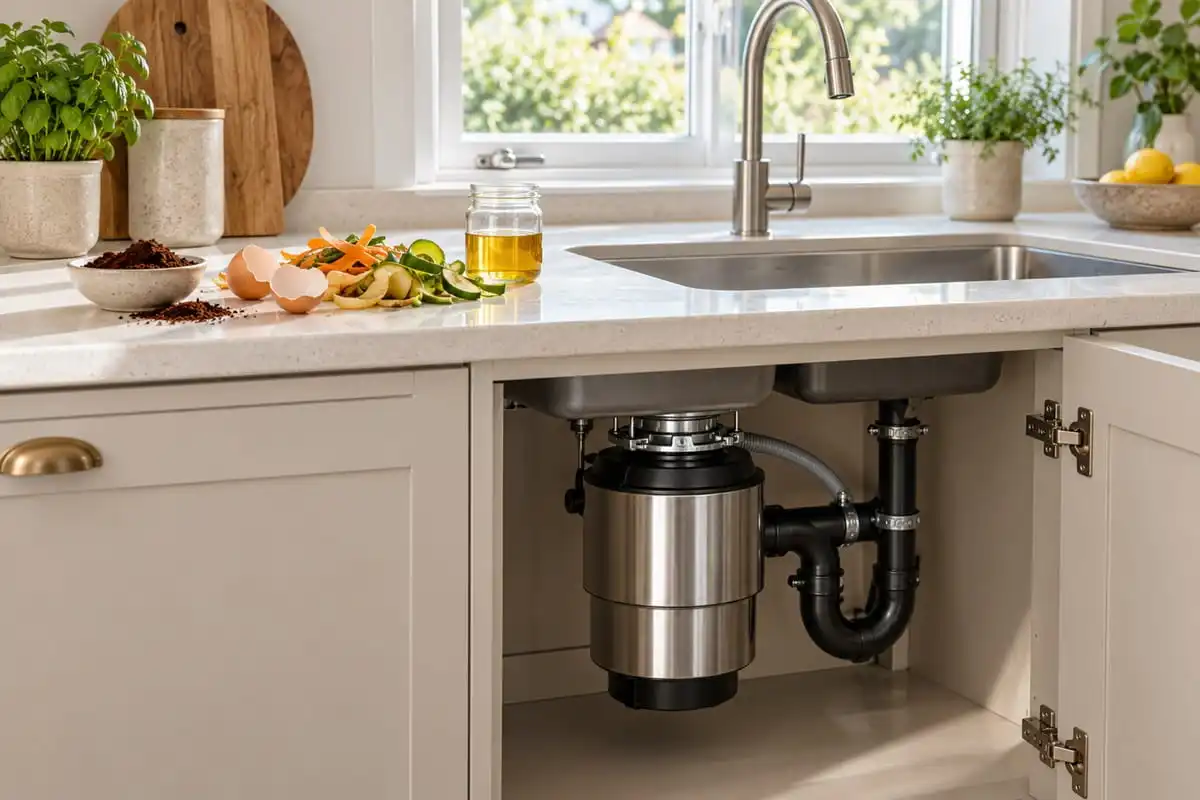
A garbage disposal makes kitchen cleaning easier, but putting the wrong materials into it can lead to blockages, unpleasant odours or appliance damage.
If you’re wondering what not to put in a garbage disposal, the most important items to avoid are cooking grease, non-food objects, harsh chemicals and oversized hard food waste. Other items, including coffee grounds, eggshells and fibrous vegetables, require more careful consideration.
In the UK, these appliances are often called food waste disposers. Understanding their limitations can help you protect both your appliance and household plumbing.
What Should You Never Put Down a Garbage Disposal?
Not every food scrap belongs in a waste disposal unit. Some materials can damage its internal components, while others may accumulate further along your drainage pipes.
Here’s a quick guide:
| Item | Potential problem |
|---|---|
| Cooking grease and oil | Pipe blockages |
| Glass, metal and plastic | Appliance damage or jamming |
| Paint and harsh chemicals | Unsafe disposal and possible damage |
| Large bones and hard shells | Jamming or excessive strain |
| Coffee grounds | Possible drain accumulation |
| Rice and pasta | Starchy build-up in pipes |
| Fibrous vegetables | Possible difficulty in some models |
| Large quantities of scraps | Overloading or poor drainage |
The exact foods your appliance can handle depend on its design and the manufacturer’s instructions.
1. Cooking Grease, Oil and Fat
Cooking grease is one of the clearest examples of what should never go down a garbage disposal.
Warm cooking fat may flow easily, but it can cool and solidify inside drainage pipes. Over time, accumulated fats can contribute to stubborn blockages.
According to Water UK, cooking fats can cause problems even when washed down with hot water and washing-up liquid.
Instead:
- Allow cooking fat to cool.
- Collect it in a suitable container.
- Wipe greasy pans before washing.
- Follow local council guidance for disposal.
Never assume that running hot water will safely remove grease from your plumbing.
2. Glass, Metal and Plastic
Garbage disposals are designed for food waste, not household rubbish.
Keep these materials out of the grinding chamber:
- Broken glass.
- Metal bottle caps.
- Cutlery.
- Plastic packaging.
- Aluminium foil.
- Small metal objects.
Hard foreign objects can jam or damage the appliance, while plastic and other non-food materials should not enter the wastewater system.
InSinkErator’s manufacturer guidance specifically warns against placing glass, metal and plastic into its disposers.
3. Paint, Chemicals and Harsh Drain Cleaners
A garbage disposal is not a suitable place for disposing of household chemicals.
Avoid pouring the following into the appliance:
- Paint and paint thinners.
- Solvents.
- Caustic drain cleaners.
- Automotive fluids.
- Unapproved cleaning chemicals.
These substances may damage components or create safety and environmental problems.
Follow the product label and your council’s waste-disposal guidance. If your sink becomes blocked, don’t automatically reach for a chemical drain cleaner.
4. Oversized Bones and Hard Shells
Large bones and exceptionally hard materials can put unnecessary strain on a waste disposal unit.
Avoid forcing oversized bones, oyster shells or similarly hard objects into the grinding chamber.
However, not every bone is automatically unsuitable.
Some InSinkErator models can process smaller bones, while the manufacturer’s installation guidance identifies large bones and certain shells as unsuitable.
Always check your appliance manual before attempting to grind hard food waste.
5. Coffee Grounds
Coffee grounds are frequently listed among foods to avoid putting down a garbage disposal.
Although individual particles are small, accumulated grounds can contribute to deposits inside household drainage pipes.
The appliance may process them successfully, but that doesn’t necessarily mean your plumbing will remain clear.
For a cautious approach, collect used coffee grounds separately and dispose of them through an appropriate household waste or composting system.
6. Rice, Pasta and Potato Peels
Starchy foods deserve particular attention.
Rice and pasta absorb water, while large quantities of potato peelings can create a thick mixture when processed.
Putting excessive amounts through a disposal may contribute to drainage problems, particularly where pipework is already partially restricted.
A sensible approach is to:
- Avoid disposing of large portions at once.
- Remove substantial leftovers before washing dishes.
- Feed permitted scraps gradually.
- Follow the manufacturer’s recommendations.
Small amounts may be acceptable for certain appliances, so treat this as a precaution rather than a universal prohibition.
7. Fibrous Vegetables
Celery, asparagus, corn husks and similar vegetables contain tough, stringy fibres.
Some older or less capable disposal units may struggle with these materials.
However, modern appliances vary considerably.
InSinkErator’s UK guidance explains that certain models can process fibrous foods, including banana peel and rhubarb.
Therefore, avoid assuming that all fibrous vegetables will damage every garbage disposal.
Check your particular model’s capabilities, and never force material through an appliance that appears to be struggling.
8. Excessive Amounts of Food Waste
Even when individual foods are suitable, overloading the disposal can interfere with effective grinding.
Instead of pushing large quantities into the sink:
- Introduce permitted scraps gradually.
- Keep water flowing during operation.
- Allow the appliance time to process the waste.
- Stop immediately if unusual sounds develop.
A garbage disposal should make routine food waste management easier, not replace every other method of household waste disposal.
Can You Put Eggshells in a Garbage Disposal?
Eggshells are a particularly common source of conflicting advice.
Some plumbing guides recommend avoiding them because shell fragments and membranes may contribute to build-up.
However, InSinkErator identifies eggshells as suitable for certain food waste disposers.
The most reliable approach is to follow your manufacturer’s guidance rather than treating either recommendation as universally correct.
How to Use a Garbage Disposal Safely
Correct operation is just as important as knowing which materials to avoid.
According to InSinkErator’s operating guidance, running cold water during grinding helps food particles move through the system.
For everyday use:
- Turn on a moderate flow of cold water.
- Switch on the disposer.
- Introduce suitable food scraps gradually.
- Allow grinding to finish.
- Switch off the disposer.
- Keep the cold water running briefly to flush remaining particles.
Never place your hand inside the grinding chamber, even when the appliance appears to be switched off.
What Should You Do if Your Garbage Disposal Gets Clogged?
If the appliance hums, jams or stops draining properly, stop using it.
Switch it off and disconnect the electrical supply before attempting any inspection.
Never reach inside with your fingers. Some models provide a dedicated tool for releasing jams, but the correct procedure depends on the appliance.
Consult the manufacturer’s troubleshooting instructions. If the problem persists, contact a qualified professional.
Frequently Asked Questions
Can coffee grounds clog a garbage disposal?
Coffee grounds may contribute to drain accumulation, particularly when large quantities are regularly washed into the plumbing. Separately collecting them is a sensible precaution.
Should I use hot or cold water with a garbage disposal?
InSinkErator recommends cold water during food grinding and briefly afterwards. Always follow your own appliance’s operating instructions.
Can I put potato peels down a garbage disposal?
Some disposers can process potato peelings, but large quantities may create drainage problems. Check the manufacturer’s guidance and avoid overloading the unit.
Can I use chemical drain cleaner in a garbage disposal?
Do not use caustic drain cleaners unless your appliance manufacturer specifically permits them. Follow approved troubleshooting procedures instead.
Final Thoughts
Knowing what not to put in a garbage disposal can help prevent unnecessary blockages, appliance damage and plumbing problems.
Keep grease, non-food objects, hazardous chemicals and oversized hard materials out of the unit. Exercise caution with starchy foods, coffee grounds and fibrous vegetables.
Most importantly, remember that different models have different capabilities. Follow your manufacturer’s instructions, use cold water as directed and address unusual noises or drainage problems promptly.